Call us now :08045802065
 Send Inquiry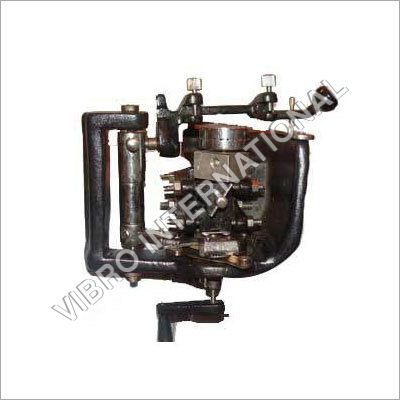
Freezing Microtome
28000 INR/Unit
Product Details:
- Speed Range Manual, Up to 50 Sections (Depends on User)
- Heating Capacity not applicable Volt (V)
- Glass Type not applicable
- Features Rapid freezing, corrosion-resistant construction, precise section thickness adjustment, stable base
- Display Type not applicable
- Control Type Manual Lever Control
- Accuracy 1% / As per fitted instrument %
- Click to View more
X
Freezing Microtome Price And Quantity
- 1 Piece
- 28000 INR/Unit
Freezing Microtome Product Specifications
- Sectioning of biological tissues
- 54 Centimeter (cm)
- Rapid freezing, corrosion-resistant construction, precise section thickness adjustment, stable base
- 54 x 45 x 40 cm Centimeter (cm)
- 45 Centimeter (cm)
- not applicable Volt (V)
- not applicable
- brass casting iron
- blue/black
- brass castingiron
- 8 Kilogram(Kg)
- Manual, Up to 50 Sections (Depends on User)
- manual
- Preparation of Thin Tissue Sections for Histopathological Examination
- 40 Centimeter (cm)
- Rectangular
- 1 year
- 1% / As per fitted instrument %
- not applicable
- Up to -30 C (Freezing Plate)
- not applicable kilovolt (kV)
- not applicable kilovolt (kV)
- Manual Lever Control
- standard
- Histopathology Laboratory Instrument
- not applicable
- Other
- 8 Kilograms (kg)
- Approx. 22 kg
- Adjustable Universal Blade Holder
- 5 to 40 microns
- Powder Coated Anti-rust Finish
- Histology and Pathology Labs
- Up to 30 x 25 mm specimen
- Complete with object holders, knife, and freezing compound tray
- Suitable for laboratory environments, non-electric
- Hand-Operated, Maintenance Free
- Integrated, for rapid cooling
Freezing Microtome Trade Information
- Ambala Cantt
- Cash Advance (CA), Cash in Advance (CID), Cheque
- 2 Week
- No
- Contact us for information regarding our sample policy
- Asia, Australia, Central America, North America, South America, Eastern Europe, Western Europe, Middle East, Africa
- All India
Product Description
The offered microtome is used to cut frozen specimen such as organic tissue, into thin sections for microscopic examination. Provided microtome is designed with 15mm dia. specimen stage and clamping device that ensures fixing of it to any standard table.
Features:
-
Pressure flexible tubing of 150cms ensures proper connection to carbon dioxide cylinder
-
User friendly, low maintenance and easy to install
-
Wide feed range from 5 to 30 microns in 5 microns step each
-
Specimen clamp can be locked at any position to adjust angle of sectioning
- can be diagnostic when affordability of cryostat microtome is not availability/possible.
Precision and Flexibility in Sectioning
Achieve superior sample preparation with the adjustable universal blade holder, allowing precise sections from 5 to 40 microns. Suitable for a diverse range of biological tissues, the microtome offers flexibility necessary for modern histology and pathology labs. The integrated freezing plate rapidly freezes specimens to support consistently high-quality slice integrity.
Essential Accessories for Complete Workflow
This freezing microtome comes fully equipped with all necessary accessories, including object holders, a sharp knife, and a freezing compound tray, ensuring a smooth, uninterrupted workflow. Its user-friendly manual lever control and stable design contribute to both ease of use and precise results, making it a valuable addition to any lab.
FAQs of Freezing Microtome:
Q: How does the integrated freezer compartment aid in sectioning biological tissues?
A: The integrated freezer compartment rapidly chills the specimen plate to temperatures as low as -30C, allowing tissues to freeze quickly and uniformly. This rapid freezing is essential for maintaining tissue integrity and achieving accurate, thin sections for microscopic examination.Q: What types of laboratories is this freezing microtome suitable for?
A: This microtome is ideal for histology and pathology laboratories where precise sectioning of biological tissues is required. Its robust, non-electric design makes it especially suitable for laboratories without continuous electricity and in environments where reliability and easy maintenance are priorities.Q: When should I use a freezing microtome instead of a rotary microtome?
A: A freezing microtome is preferred when working with fresh or unfixed tissue samples that require quick freezing to preserve cellular structure. It is particularly valuable for rapid diagnosis or studies involving enzyme activity and certain immunohistochemistry protocols.Q: What is the capacity and sample size limit for this microtome?
A: The microtome can accommodate specimens up to 30 x 25 mm and offers a specimen chamber capacity of 2.5 litres. This allows for the efficient sectioning of a range of tissue types and sizes without compromising on precision or ease of handling.Q: How is section thickness adjusted and controlled?
A: Section thickness is manually adjustable between 5 and 40 microns using the lever control mechanism. This allows users to produce thin sections tailored to their specific analytical or diagnostic needs.Q: What maintenance is required for this microtome?
A: This freezing microtome is designed to be maintenance-free. Its anti-rust, powder-coated stainless steel construction and toughened glass surfaces ensure durability, while the manual operation eliminates the need for electrical servicing or complex parts replacement.Q: What are the main benefits of using a manually operated, non-electric microtome?
A: Manual operation ensures precise user control, eliminates dependency on electricity, and makes the instrument suitable for remote or resource-limited locations. The design also safety, durability, and ease of cleaning within busy laboratory environments.Tell us about your requirement

Price:
Quantity
Select Unit
- 50
- 100
- 200
- 250
- 500
- 1000+
Additional detail
Mobile number
Email

Other Products in 'Microtomy' category


 Send Inquiry
Our Products

4, Vikaspuri Near Industrial Area, Sai Mandir Road, Ambala Cantt,Ambala Cantt - 133006, Haryana, India

Mr S. K Saini
(M.D)
Mobile :08045802065
 Send Inquiry
 Send SMS
Developed and Managed by Infocom Network Private Limited.
