Call us now :08045802065
 Send Inquiry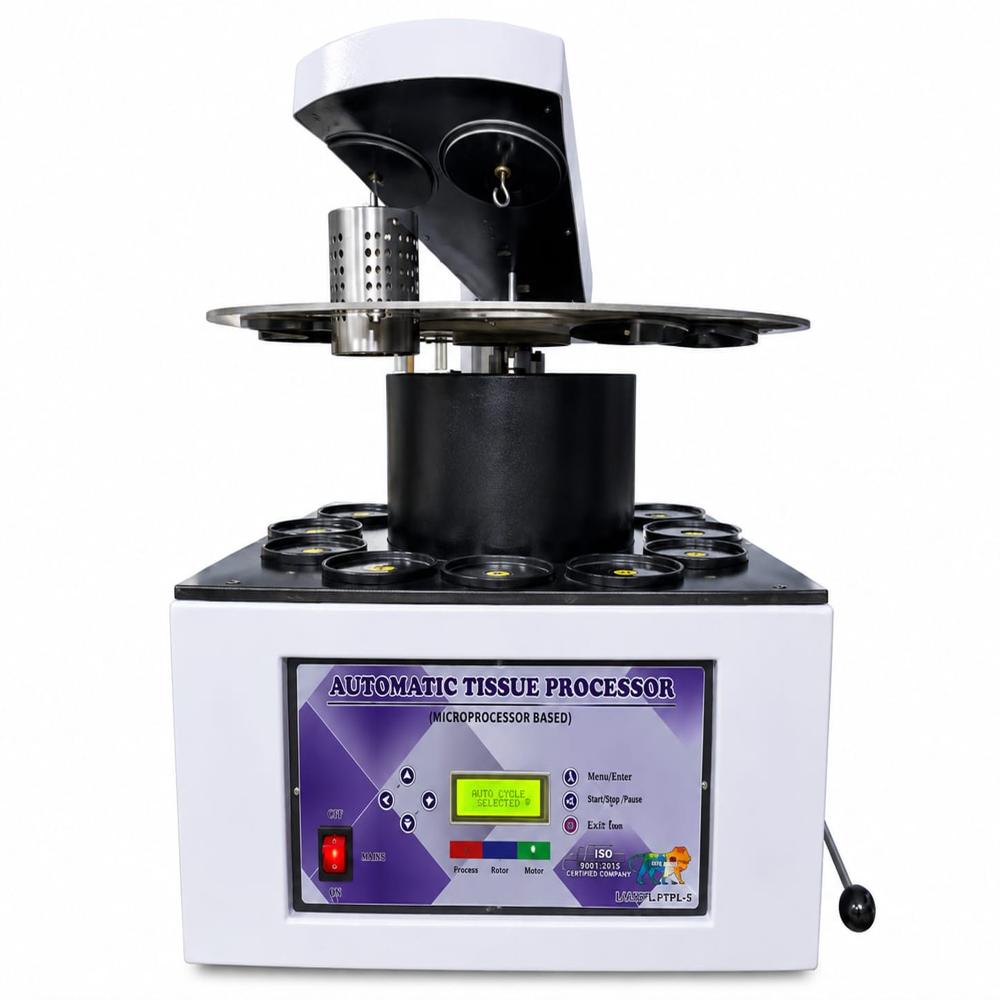
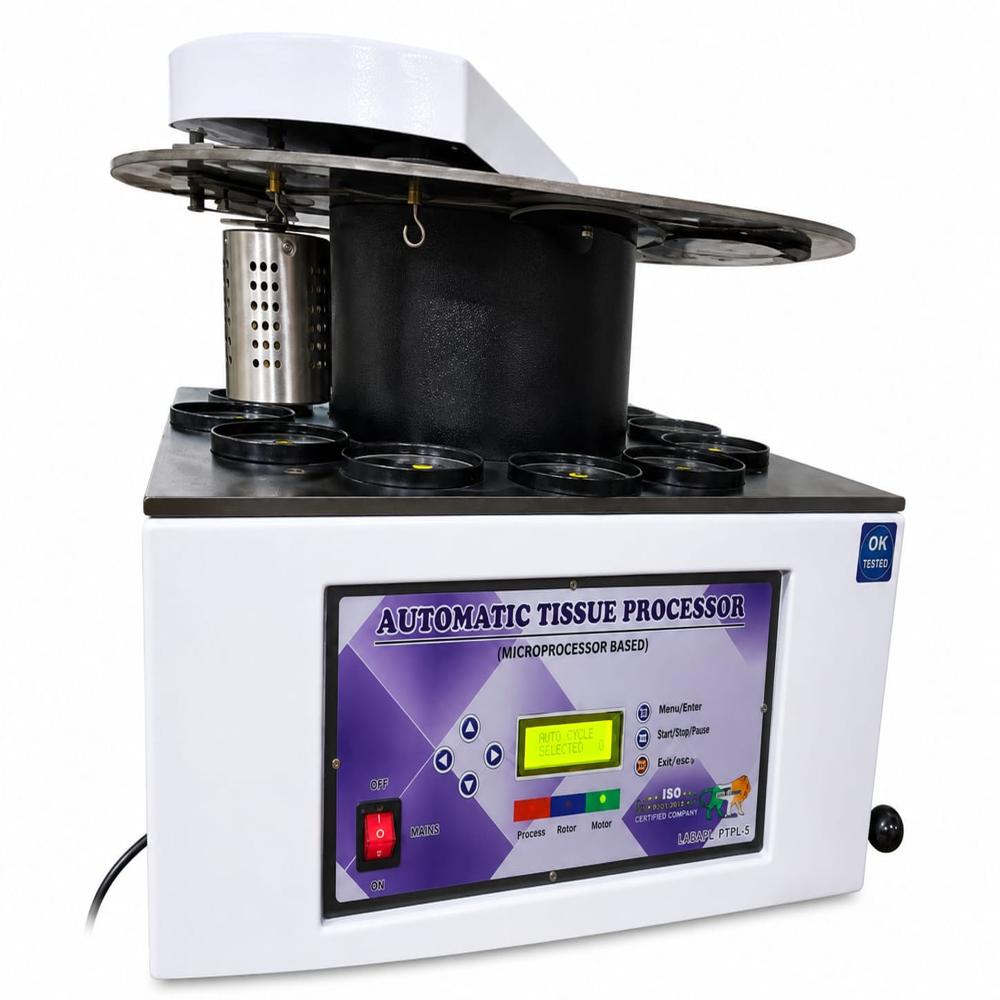
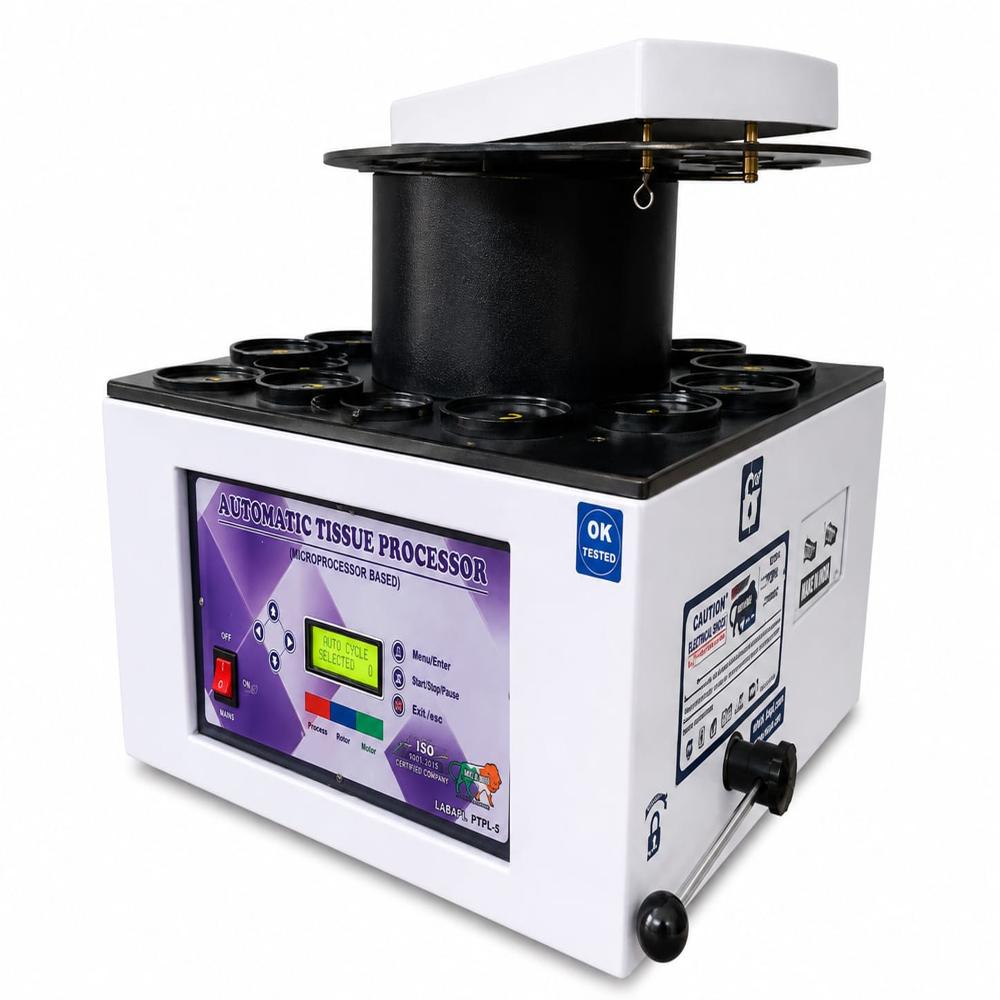
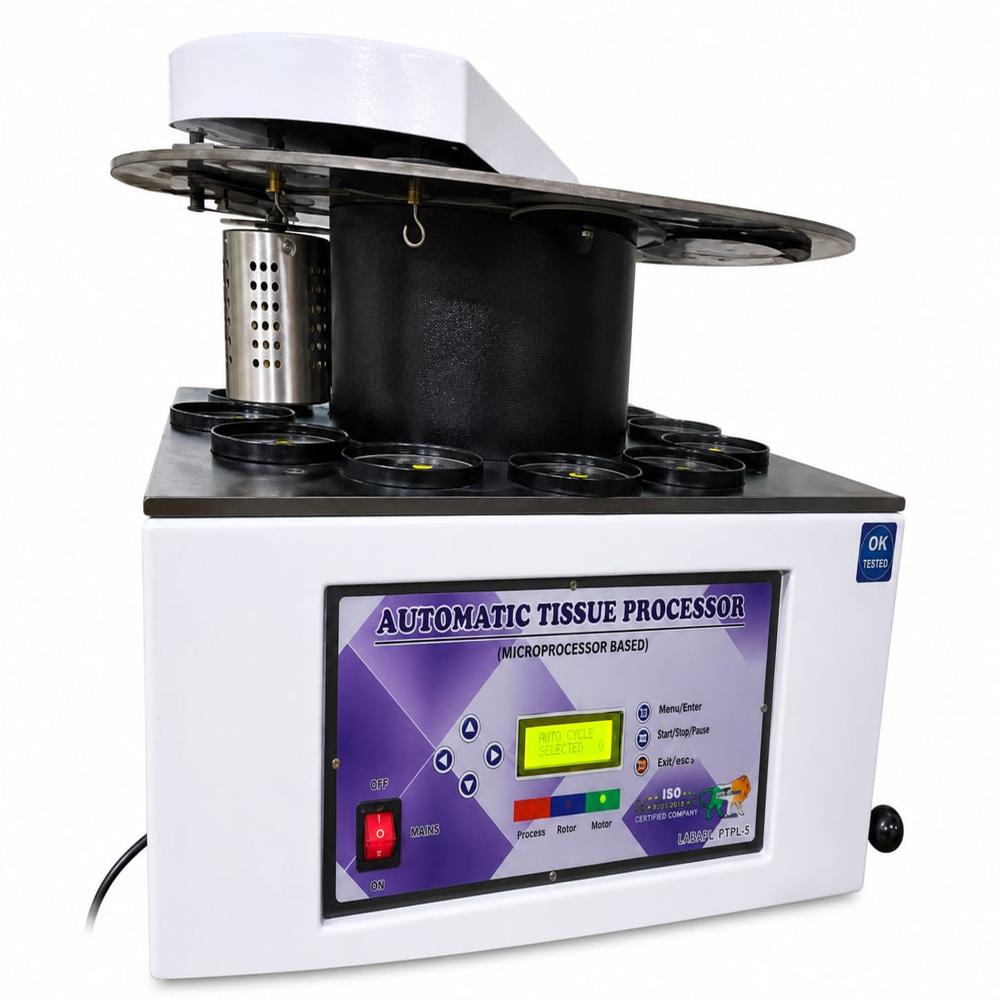
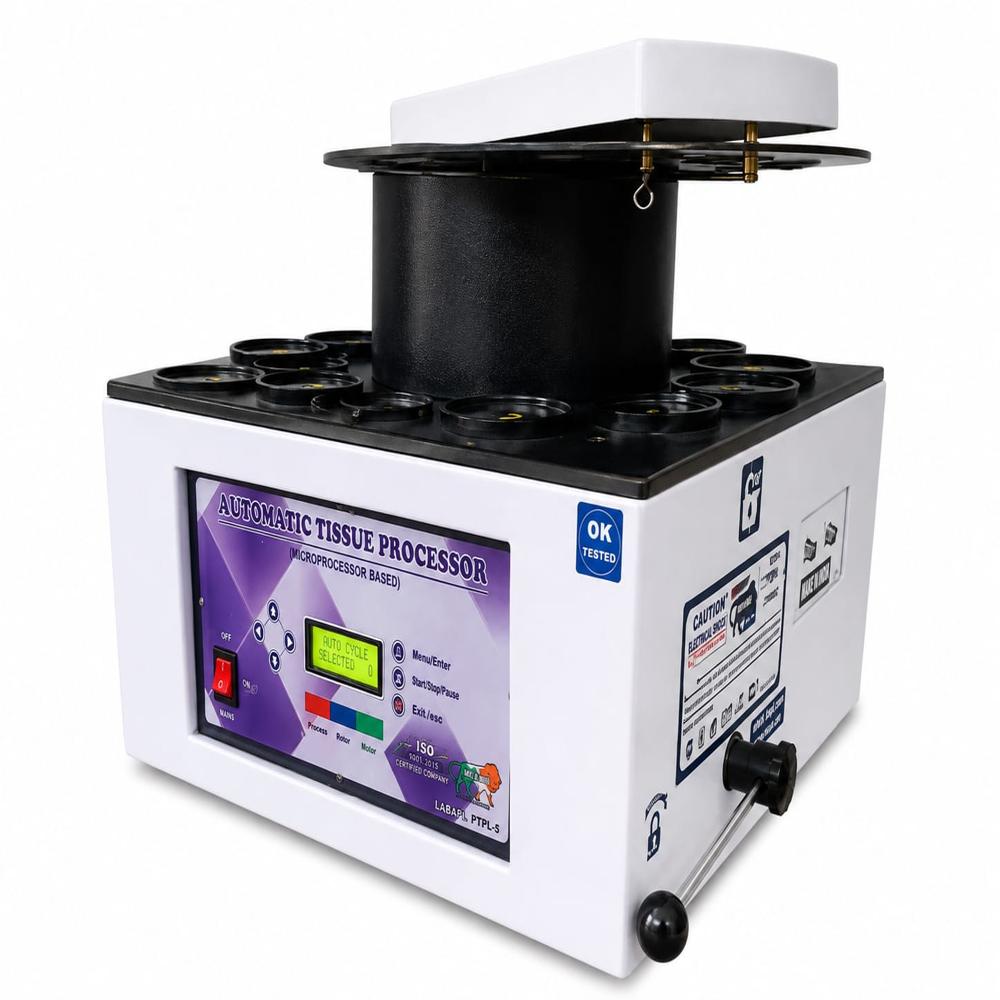
Automatic Tissue Processors
125000 INR/Piece
Product Details:
- Automation Grade automatic
- Wall Mounted no
- Operating Type automatic
- Function tissue processing
- Dimension (L*W*H) 560 x 480 x 1080 Millimeter (mm)
- Humidity Range N/A
- Capacity 1 Ltr
- Click to View more
X
Automatic Tissue Processors Price And Quantity
- 125000 INR/Piece
- 1 Piece
Automatic Tissue Processors Product Specifications
- white
- N/A
- tissue processor
- brass alluminium shhet metal
- new
- keep in clean dry place
- electric
- Automatic Tissue Processing, Uniform Processing, Digital Control
- 220 v Volt (v)
- N/A
- Pathology Labs, Histopathology Labs, Hospitals, Diagnostic Centers
- 1 Liter (L)
- 560 x 480 x 1080
- Automated Tissue Processing Technology
- 1 Tissue Processor + Standard Accessories
- Easy to use with screen display. Wide time range: delay time 59hrs59min. The longest working hours for each container is 59hr59min, Time design. least interval is I min.
- 220v Volt (v)
- yes Months
- Easy Operation, Digital Display, Compact Design
- tissue samples processing
- rectangular
- 1 %
- 60-70 for wax bath dispensers Celsius (oC)
- digital display
- LED Indicator
- N/A db
- Tissue Sample Processing
- white
- no
- TISSUE PROCESSING
- 220 v Volt (V)
- 1 year
- AUTOMATIC
- Histopathology Laboratory
- automatic
- no
- automatic
- tissue processing
- 560 x 480 x 1080 Millimeter (mm)
- N/A
- 1 Ltr
- N/A X
- 55 Kilograms (kg)
- 1080 Millimeter (mm)
- digital
- tissue processor
- 50 Hertz (HZ)
- Programmable up to 99 hours
- Automatic
- Fitted with castor wheels for easy movement
- Approx. 65 kg
- Powder coated anti-corrosive finish
- Up to 150 cassettes per cycle
- Transparent acrylic covers for each beaker
- 12 (10 reagent beakers + 2 wax baths)
- Auto cutoff, audio-visual alarms on error
- Borosilicate glass
- Room temperature to 60 C
Automatic Tissue Processors Trade Information
- Asia, South America, Eastern Europe, Western Europe, Middle East, Africa, Australia, Central America, North America
- All India
Product Description
Tissue Processor: this processor is used to process animal and human tissues automatically. It is accurate and easy to use and maintain. It is an excellent choice for histology and pathology labs of hospitals and research institutions.
Technical Data :
Steps of processing tissue: 12 steps.
Glass containers: 10 with capacity of Liter each.
Wax cups: 2 with capacity of IL each. Temperature range: 45-85C3
Process: Each cup working hours between 0-59hr 59min.
Delay process: 0-59hrs59min.
Vertically reciprocal motion of tissue basket: 3 times/min.
Tissue basket specification: Barrel tissue basket- 95x80mm.
Layer nacelle- & 95x80mm, Five layers.
Weight: 60kg.
Rated voltage: 220v, 50Hz or 110V, 60Hz
External dimension: (diameter) 660 x (high) 550 x 680(Tip top) mm.
Features:
Easy to use with screen display.
Wide time range: delay time 59hrs59min. The longest working hours for each container is 59hr59min, Time design.
least interval is I min.
Wax jars adopt constant temperature control system. Temperature precision high: defend pollution, defend canker.
Adopting 9 slices 1.2L medicine aquarium, at any moment observe tissue change at work.
According to user's need to tailor standby electrical source, after power cut it can also work in great, working hours can reach 4-16 hours.
Easy to clean open architecture and automatic basket movement, the processor reduces routine maintenance and handling time. Low noise operation ensure a comfortable lab environment.
Advanced Automation and User-Friendly Operation
This automatic tissue processor streamlines histopathology workflows with programmable timers up to 99 hours and digital displays, supporting easy, reliable operation. Its variable agitation and precise temperature control ensure uniform processing for a variety of tissue samples.
High Capacity and Efficient Tissue Processing
With 12 stations and a capacity of up to 50 -100 cassettes per cycle, the tissue processor caters to high-throughput laboratory settings. The systems borosilicate glass beakers and programmable agitation enhance reagent penetration, ensuring consistent, high-quality results every time.
FAQs of Tissue Processors:
Q: How does the tissue processor ensure consistent and reliable tissue processing?
A: The processor uses digital microprocessor-based controls, precise temperature regulation (1C), variable agitation, and programmable timers to deliver uniform results. Each of the 12 stations optimally handles tissue samples, enhancing reagent penetration and paraffin infiltration.Q: When should I use the programmable timer feature, and how does it benefit processing?
A: The programmable timer, which can be set for up to 99 hours, is ideal for scheduling overnight or extended tissue processing cycles. This enables automated workflow, allowing the processor to run unattended while ensuring precise handling of delicate samples.Q: Where can this tissue processor be utilized effectively?
A: It is designed for use in histopathology laboratories across healthcare, research, or educational institutions in India, providing reliable, automated tissue processing for standard and high-throughput sample loads.Q: What materials are used in constructing the beakers and body, and why is it important?
A: The beakers are made from borosilicate glass, chosen for its chemical resistance and temperature durability, while the body is stainless steel with a powder-coated anti-corrosive finish. Both materials ensure long-term durability and minimal contamination risk.Q: How mobile is the equipment and what are its dimensional specifications?
A: The tissue processor is fitted with castor wheels, making it easy to move within the lab. Its compact dimensions (560 x 480 x 1080 mm) help maximize space efficiency without compromising processing capacity.Q: What are the benefits of using this processor for histopathology applications?
A: Benefits include high capacity (up to 50 -100 cassettes per cycle), programmable and automated processing, minimized manual intervention, enhanced safety features, and robust construction, all of which contribute to efficient, accurate, and safe histopathological analyses.Tell us about your requirement

Price:
Quantity
Select Unit
- 50
- 100
- 200
- 250
- 500
- 1000+
Additional detail
Mobile number
Email

Other Products in 'Staning' category

 Send Inquiry
Our Products

4, Vikaspuri Near Industrial Area, Sai Mandir Road, Ambala Cantt,Ambala Cantt - 133006, Haryana, India

Mr S. K Saini
(M.D)
Mobile :08045802065
 Send Inquiry
 Send SMS
Developed and Managed by Infocom Network Private Limited.
